How to Stop Robocalls and Robotexts: Your Rights and Real Options
What callers need your consent for, how to opt out, how to block and report, and what the Do Not Call list does not do. Based on the FCC guide.
Autobaselli · 2 min read
Calls and texts from numbers you do not know can be annoying or fraudulent. The FCC's consumer guide explains what callers are allowed to do and what you can do about it. This guide follows that page, which the FCC lists as last updated 20 November 2026. The rules it describes are United States rules.
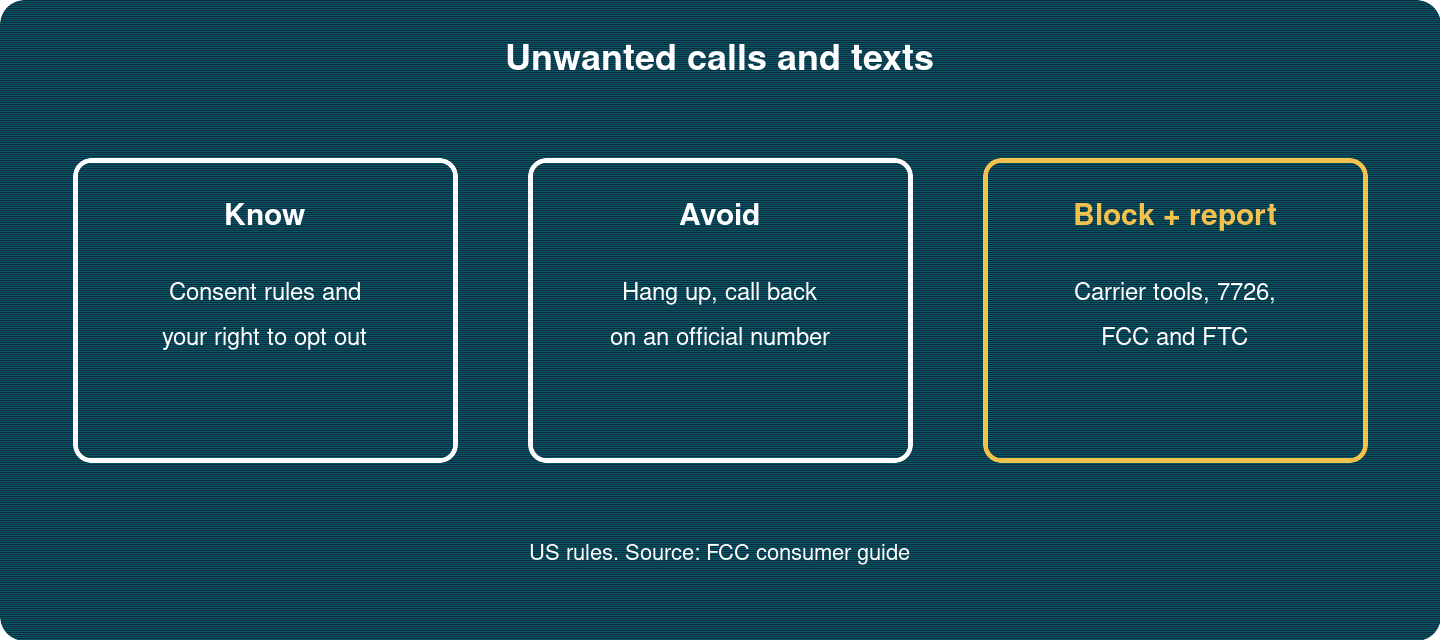
The FCC's approach in three parts.
Know the rules
A prerecorded telemarketing call to your phone needs your prior written consent, on paper or electronically.
An autodialed or prerecorded call or text to a mobile phone needs your consent. Emergency calls about danger to life, safety or property are not covered.
Prerecorded telemarketing calls must offer an opt-out at the start. You may opt out of any robocall or robotext at any time, in any reasonable way, even if you agreed before.
Prerecorded messages must give the caller's name, number and business name at the start.
The FCC says AI-generated voice calls are illegal unless you agreed to receive them or the caller is exempt.
Telemarketers may not call your home before 8 a.m. or after 9 p.m.
How to avoid phone scams
The FCC's advice, in short:
Do not answer calls from numbers you do not know.
Hang up right away if someone asks for money or personal information.
If you feel pressured, or are asked to pay with gift cards, it is a scam.
Never share account numbers, Social Security numbers, passwords or PINs by phone.
If someone says they are from a company or agency, hang up and call back using a number from an account statement or the official website.
Do not respond to texts or click links from numbers you do not recognise.
Ask your phone company about call blocking tools, and look into blocking apps.
Most carriers let you report spam by forwarding the text to 7726 (SPAM). Check with your provider.
Register a number on the National Do Not Call Registry at donotcall.gov or on 1-888-382-1222, calling from the number you want to register. Legitimate telemarketers agree not to call numbers on it. It will not stop scammers.
Report illegal calls or texts to the FCC and choose the "unwanted calls" category. Note if your number is being spoofed. The FCC says it does not resolve individual complaints but uses them to guide enforcement.
Report phone scams or Do Not Call violations to the FTC.
Worked example
A text says your parcel is held and asks you to pay a fee through a link. Do not click it. Forward it to 7726 if your carrier supports it, delete it, and check the delivery on the carrier's real website. If a caller claims to be your bank and asks for a code, hang up and call the number on your card. The related checklist is in how to spot a phishing text.